Botox has earned its reputation because it works, and it works predictably when used with skill. That said, predictably does not mean identically. Muscles behave differently from face to face, metabolism varies, and our eyes tend to over-index on tiny asymmetries we never noticed before. The gap between what someone imagines and what the product can deliver is where most disappointment lives. Bridging that gap is not about hype. It is about anatomy, dosing strategy, timing, and honest conversation.
" width="560" height="315" style="border: none;" allowfullscreen="" >
I have sat with patients who feared looking frozen after one treatment, and with others who believed a few units could erase structural lines carved over decades. I have also treated tech workers with “phone neck,” runners with hyperactive forehead lift, and actors who need expressive brows to read on camera. In each case, the method is the same. Map the muscles, define the goal in concrete terms, align the plan with how Botox actually functions, then refine over time.
What Botox can do, and what it cannot
Botox blocks acetylcholine at the neuromuscular junction. In practical terms, it softens the pull of a muscle for a few months. That means it treats dynamic wrinkles, the lines that deepen when you frown, squint, or lift your brows. It does not resurface skin, replace lost volume, or fix etched creases caused by sun damage and age. When people expect filler or laser results from neuromodulators, they feel let down. When they want smoother movement, fewer scowls, and subtler brow elevation, the outcome matches the promise.
The drug does nothing for bone structure. It will not lift a heavy lid or create cheekbones. It can shape expression though. Adjusting depressor and elevator muscle balance can nudge brows, corners of the mouth, and even the jawline into better harmony. That is the art of facial balance botox, not by adding, but by releasing tension where it distracts.
Timeframes that matter more than most realize
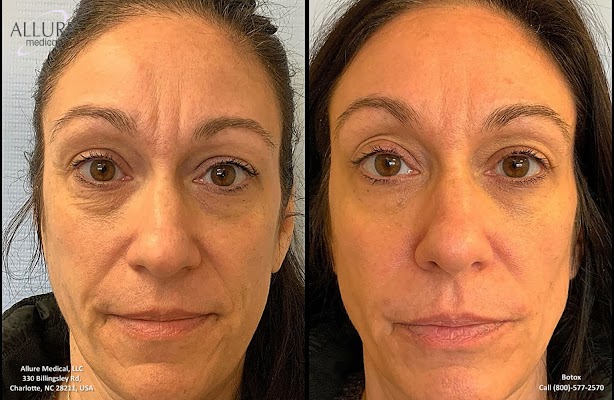
The waiting period is where expectations often fray. Onset starts around day 3 to 5, and full best botox Charlotte North Carolina effect usually arrives by day 10 to 14. Sometimes it takes closer to three weeks for slower responders. If someone expects to wake up line‑free two days after a visit, they will likely worry before they should. The opposite problem appears at week two, when some lines remain. Not all creases vanish even with complete muscle relaxation, especially if they have been present at rest for years. Skin needs time off from repetitive folding to remodel. In my practice, I tell patients to judge the outcome around day 14 and again at week 6. Those two checkpoints capture the peak effect and the skin’s early response to reduced motion.
Duration is similarly variable. For typical cosmetic areas, effect spans about three to four months, sometimes longer in first‑time users or those with lower metabolism, sometimes shorter in athletes or those with fast turnover. I have rock climbers who metabolize in ten weeks and accountants who sail past five months. Expect ranges, not absolutes.
Anatomy first, dosage second
Accurate placement wins over sheer volume. Forehead lines, for example, are not just a “forehead problem.” They are a negotiation between frontalis (the elevator) and the corrugator, procerus, and orbicularis oculi (the depressors). If you silence the frontalis without softening the depressors, the brow can feel heavy. The opposite mistake, treating only the frown complex while leaving an overactive frontalis, can create a compensatory arch or “surprised” look. Face mapping for botox and an anatomy driven botox approach produce the natural expression people want.
Around the eyes, lateral orbicularis injections soften crow’s feet. Too high or too posterior and you can dull a smile or change blink. In the lower face, dosing must be more conservative. Over‑relax the zygomaticus or the depressor anguli oris, and you risk a smile that does not fire cleanly. For the masseter, used in jaw clenching and face slimming, aim for symmetry and go slow for the first pass. Smaller, layered dosing with micro adjustments botox beats one big blast.
Neck work deserves special caution. The platysma is sheet‑like, superficial, and connected to lower face dynamics. Posture related neck botox has become a conversation in the age of screens. People notice neck bands when they tilt forward and down, which tightens platysmal cords and deepens horizontal “tech lines.” The term phone neck botox gets tossed around on social media, often with simplistic before‑and‑afters. In reality, small doses placed along true platysmal bands can soften vertical cords. Horizontal lines respond far better to skin‑directed treatments, like energy devices or biostimulators, than to muscle weakeners. With neck injections, safety margins are narrow because diffusion can affect swallowing. Start light, assess at two weeks, and adjust only if benefits clearly outweigh risks.
The aesthetics of restraint
A conservative botox strategy respects how faces communicate. We read micro‑expressions in milliseconds. If forehead motion drops to zero, you may look smooth but not quite yourself. I often coach a minimal approach for first‑timers: use fewer units, accept a touch of movement, learn how your face responds. From there, step up as needed. Patients who want an expressive face botox result almost always return happier, because friends say they look rested rather than “done.” Avoiding overdone botox is less about numbers and more about which fibers you quiet and which you leave alone.
The artistry vs dosage botox debate is sometimes overstated. Precision botox injections require both. You need an anatomical map in your head and the hand to place tiny volumes at correct depths, but you also need the judgment to stop when the goal is met, not when the vial is empty.
Facial harmony, symmetry, and the limits of correction
Perfect symmetry does not exist in nature. Most of us have one brow higher, one eye rounder, one side that smiles wider. Facial symmetry correction botox can soften obvious imbalances, like a markedly higher lateral brow due to dominant frontalis fibers, or a mouth corner that drops when a depressor fires too strongly. But there are hard limits. Skeletal asymmetry, dental occlusion, and soft tissue volume differences will not yield to neuromodulators alone. When symmetry is the primary concern, I discuss facial balance botox as part of a broader plan with fillers, dental input, or even surgical consultation, depending on severity.
Patients frequently ask about facial harmony botox for global refinement. The idea is appealing, and with small doses placed in strategic spots you can indeed improve balance. Example: relax the mentalis to smooth an orange‑peel chin, lighten the DAO to reduce a permafrown, and slightly tame the lateral frontalis to prevent spocking. The net effect is a calmer, friendlier resting face. Still, restraint is key. Over‑treatment flattens personality.
What social media gets wrong
Botox popularity owes a lot to social platforms. Quick clips show the syringe, then the after photo. What is not shown is the consultation, the consent, the waiting period, and the occasional tweak. Botox myths social media tends to repeat include the idea that more units last longer no matter the site, that dilution always means weakness, and that a “lip flip” will simulate filler. The reality is nuanced. Botox dilution myths confuse concentration with total dose. If a provider uses a higher dilution but places the correct total units precisely, the clinical effect is comparable. A “lip flip” can evert the upper lip slightly by relaxing the orbicularis oris, but it will not add volume. And more units in the forehead do not always last longer, they sometimes migrate more, especially in active frontalis users.
Aesthetic medicine botox sits in the same ecosystem as memes and fast trends. I remind people that cosmetic dermatology botox is still medicine. Sterile technique, quality control botox, and adherence to botox injection standards matter. An injector posting flawless reels can still be casual about reconstitution or storage. Ask about botox storage handling. The product should be refrigerated after reconstitution, used within an appropriate window, and dosed with calibrated syringes so botox dosage accuracy is not guesswork.
Evidence, safety, and the comfort of statistics
Botox has one of the largest safety datasets in medical aesthetics. Decades of botox clinical studies and botox safety studies show a strong profile when administered properly. Adverse effects in cosmetic dosing are usually mild and temporary, like localized bruising, headache, or transient eyelid or brow ptosis when placement drifts. The incidence of significant events in the common cosmetic zones is low, reported in low single digits per thousand treatments in many botox efficacy studies and post‑marketing surveillance. Individual risk varies with anatomy and technique. A provider who knows where the levator palpebrae sits and how frontalis fibers insert can lower ptosis risk from “unlikely” to “rare.”
Botox research continues to refine best practices. Micro‑dosing for pore and sheen improvement sits in the gray zone between aesthetic outcome and off‑label curiosity. Some patients love it, some notice little. Modern botox techniques, like layered micro aliquots or guided placement based on ultrasound for complex cases, represent botox innovations that improve precision in select hands. Evidence lags behind enthusiasm, as it should. I counsel patients with a science backed botox mindset: high‑confidence applications first, experimental approaches only when risks and limits are clearly understood.
The psychology of expectations
Why botox is popular has as much to do with mood as with muscle. People report feeling less irritable when they see a softer frown, which lines up with research on facial feedback. That does not mean botox treats depression, and claims to that effect oversell. Still, cosmetic procedures and mental health interact. When someone gains a bit of control over how they appear to themselves, confidence can lift. I have seen botox emotional wellbeing improvements in patients who stop fixating on a crease that felt like a personal brand. I have also seen the limits. If the expectation is that life will change because a line fades, disappointment is likely. Botox and self image need to be in dialogue, not in charge.
Botox empowerment discussion often drifts into ethics. If a 27‑year‑old wants preventive dosing, is that wise? Sometimes yes, sometimes no. A botox aging prevention debate worth having starts with rates of movement and skin type. If someone squints deeply and is already etching crow’s feet, light dosing can slow deepening. If someone barely moves and has thick, resilient skin, education, sunscreen, and a wait‑and‑see approach may be better. Botox ethics in aesthetics means not selling a subscription to someone who does not need one.
Generations, culture, and identity
Botox generational differences are real. Millennials often enter with a preventative mindset, Gen Z with stronger social media influence, and Gen X or Boomers with restorative goals. Cultural perceptions vary too. In some circles, botox normalization makes conversation easy. In others, it remains a private choice. Botox and identity walk hand in hand. Some patients worry about becoming someone else. The antidote is a botox moderation philosophy, and a conservative plan that integrates with aging rather than trying to erase it. Balancing botox with aging allows a face to keep its story while quieting distracting signals like chronic scowl or tension bands.
The visit that sets expectations right
A good consultation is part anatomy lesson, part goal setting, part reality check. We look at rest and expression. We mark not just the obvious lines, but also the muscle vectors. We talk about previous treatments and how they felt at day 2, day 14, and month 3. Patient provider communication botox succeeds when the person feels free to say, “I want smoother, but I do not want a heavy brow,” or “I want my right eyelid to look less tired without lifting the left more.” Personalized aesthetic injections rise from that clarity.
I keep a consistent approach to informed consent botox. We outline expected onset and duration, which side effects are possible, and what can be fixed with a touch‑up. We talk about what cannot be fixed immediately, like a tiny brow drop that just needs time to fade. We agree on when to check in. That is botox transparency and botox trust building in action. It also reduces the urge to panic message at day 4 when one eyebrow seems higher than the other, which often evens out by day 10.
Planning, preparation, and aftercare that align with outcomes
People like structure around a medical visit, and it helps. Below is a concise checklist I give to first‑timers. It keeps tasks clear without creating anxiety.
- Botox consultation checklist: bring medical history, list medications and supplements, identify top one or two goals, note previous reactions to injectables, share any upcoming events within two to four weeks. Botox preparation checklist: avoid blood thinners if safe and approved by your physician, minimize alcohol the day before, come with clean skin, plan for no strenuous exercise for the rest of the day. Botox aftercare checklist: keep your head upright for four hours, skip facials or massages for 24 hours, avoid heavy workouts that day, do gentle facial movement to distribute, check progress at day 14. Botox long term care: use daily sunscreen, hydrate skin, consider gentle retinoids, maintain spacing of treatments at three to four months, reassess goals every six to twelve months. Botox upkeep strategy: schedule before a major event by three weeks, rotate injection points slightly to avoid track lines, use micro adjustments botox rather than big swings, treat asymmetries intentionally, collect photos at consistent lighting and angles.
When outcomes diverge from expectations
Sometimes a result is not what someone hoped, even with a careful plan. Here is how I troubleshoot.
First, timing. Are we judging too early? If a brow looks uneven at day 5, wait and recheck at day 14. Second, dose and placement. If a small area remains too active, a few units can finish the job. If the look is a bit still, time is your friend. Over‑relaxation eases as weeks pass. Third, side effects. A mild headache in the first week is not uncommon. Bruising fades. A true lid ptosis needs patience and can be helped with drops that stimulate Müller’s muscle, but patience does most of the heavy lifting. Fourth, unrealized goals. If resting lines remain because they are structural, consider pairing with resurfacing or filler. That is a botox decision guide move rather than a failure. Finally, expectations. If someone hoped to look like a filtered version of themselves, we revisit the plan with compassion and clarity.
Technique details that protect outcomes
Botox treatment safety protocols sound dry until they prevent a problem. I mix product using sterile saline, measure units accurately, and discard beyond an appropriate shelf life window. A quick botox shelf life discussion is part of staff training and periodic audits. Reconstitution explanation matters too. We use lot tracking and cold chain logs. These steps are not marketing, they are the foundation for consistent effect.
In the room, we cleanse thoroughly, mark calmly, and talk through each site. I prefer fine needles, small aliquots, and slow injection. That reduces diffusion and bruising. In forehead work, I stay at least a couple of centimeters above the brow for heavier doses to protect lift, then feather small amounts lower only if needed. In glabella, I respect depth and angle to keep product away from the orbital septum. Around the eye, I hug the lateral fibers, staying superficial. For the masseter, I map the danger zones around the risorius and zygomaticus to avoid smile drag. These habits, applied over hundreds of faces, make outcomes more predictable.
Modern trends and where they point
Botox trends ebb and flow. The past few years brought a rise in lower face refinement, masseter slimming, microdosing for texture, and posture related neck botox conversations due to device use. Some of these reflect real needs. The masseter, for example, is overworked in many grinders and clenchers, and treatment improves not just contour but jaw comfort. Others reflect the magnetism of novelty. I discuss botox for skeptics the same way I discuss botox fans: what is the goal, what is the mechanism, what is the risk, what is the alternative?
The future of botox will likely include more personalized dosing guided by objective measures of muscle activity, perhaps through wearable EMG or imaging, along with botox innovations in formulation that tweak onset and duration. Competitors and adjuncts already exist, and botox research continues to compare efficacy and safety curves. For now, the fundamentals carry the day: anatomy, conversation, precision, patience.
Education that keeps expectations honest
A botox education guide should not talk down to people or drown them in jargon. Botox explained simply goes like this: it is a temporary muscle relaxer, it works best on motion lines, it peaks in two weeks, it wears off in a few months, it can be adjusted, and your face will still look like you. Botox explained scientifically adds receptor dynamics and diffusion coefficients, but those details rarely change the plan. What does change the plan is your life. If you are an actor, we preserve more movement. If you are a trial lawyer with a habit of brow furrow, we prioritize the glabella. If you are a new parent sleeping sporadically, we might nudge the crow’s feet so you look as rested as you can.
For the uneasy, botox concerns explained without pressure keeps doors open. I encourage people to wait if they are unsure. Botox fears addressed factually tend to fade once someone sees that a micro‑dose did not erase their personality. For those who want a complete botox guide at their own pace, I send them home with a brief handout rather than a sales pitch.
When to say no
Ethical practice includes declining treatment. If someone asks for doses that will likely cause dysfunction, or for outcomes outside what the drug can achieve, it is kinder to pass. If someone wants frequent touch‑ups that creep earlier and earlier, we reset spacing. If someone is chasing perfection because of a comment from a partner or an employer, we pause. Cosmetic enhancement balance respects autonomy and identity without fueling compulsion.
What a good maintenance rhythm feels like
After a couple of cycles, most patients settle into a botox routine maintenance pattern. They learn their personal timeline. They notice when movement returns, and they book within a week or two of that, not at the first twitch. They integrate the treatment into their schedule without drama. That is botox lifestyle integration. Some take a season off each year to remind themselves of their baseline. Some ride out short gaps when budget or travel interferes. Consistency keeps dosing lower because muscles do not fully rebound, but breaks are fine too. Graceful aging with botox does not mean chasing a static face. It means choosing where to spend your expressiveness and your softness.
My take on expectation vs. outcome
Expectations are stories we tell ourselves about the future. Outcomes are the face in the mirror two weeks after the visit. The closer those two get, the happier the person. The single best predictor I have seen is alignment. When goals are specific, anatomy is respected, dosing is precise, and there is a plan for review and refinement, outcomes meet expectations more often than not. When the goal is vague, the plan is copied from a friend’s treatment, or the timeline is rushed for an event tomorrow, probability shifts the other way.
Botox is not a personality transplant. It will not fix fatigue, grief, or a tough year. It can, however, take the permanent frown out of your resting face, release tension bands in your neck that sharpen when you hunch, quiet the lines that steal attention from your eyes, and do all of that without erasing you. If that is your expectation, the outcome tends to feel like relief.
A final word on trust and track records
Results improve when you build a long botox NC view with a provider. Small notes from each session tell the story: right brow stronger, prefers subtle, masseter responds well to lower dose, avoid lower frontalis, check platysma only in vertical bands, slight spocking at week two corrected with 2 units lateral. That is face‑specific data, not guesswork. It is also how realistic outcome counseling botox works in practice. Over time, the plan becomes yours, not a template.
If you are new, start with a clear, modest goal, give the process two cycles, and judge your experience by how you feel week to week. Expect a few surprises, both good and odd. Ask questions about sterile technique botox, storage, and dose. Share your photos and your reactions at different stages. You will learn your face the way a musician learns an instrument. And like any instrument, the best performances come from restraint, timing, and knowing which notes not to play.